
We're starting our researches :)
I picked up a very interesting topic!
Check it on our forum!
You have to find some interesting info about African swamp animals!
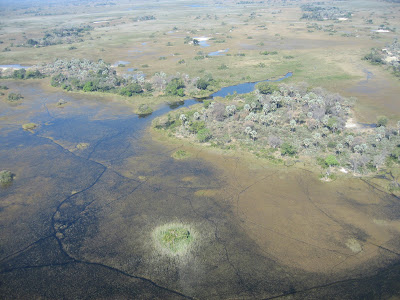
This is a picture of Okavango Delta (Okavango Swamp) in Botswana.
And remember that you have to be at least 13 years old to post on our forum!
Have fun guys! Our prizes are a V-Flags and citizenship :)
Hiki



-2.jpg)




 Posts
Posts



41 comments:
I wish i was over 13
i am 13 @.@ w00t
it seems like my wanted username was taked and now i am aqua_bubble-chobots
okay i'll post! weeeee
I dont really knows about Earth! I only knows that our earth got Global Warming. o.O
Try ur best to search it guyz
Good luck
-Yellow
yes! am 14 i will try my best to get some pictures on my post =D
-northian
Expert studies focused on Zaire assert that the Allen's Swamp Monkey (Allenopithecus nigroviridis) can only be found in swamp forests/jungles. Arborary is one apt description for the Allen's Swamp Monkeys. On the average, their number of offsprings is just one, but the important word is "average".
They are actually strongly-built, they have a gray-green skin but the face is red-shaded with hairy cheeks, plus, the body measurements range from 45 to 60 meters. Expectedly (like in so many kinds of animals), the males are bigger than the females.
The newborn Allen's Swamp Monkeys are weaned at two and a half months, but the breeding length of time is generally unknown. Its lifespan is capable of reaching up to 20 years. An Allen's Swamp Monkey is diurnal and they survive in packs consisting of at least forty members. (It is to be expected that many adult males are in a typical group.) It is quite amusing (and frustrating too, for the researchers) that notwithstanding the presence of literature expounding on Old World Monkeys, little could be proven about the Allen's Swamp Monkey's system. However, studies have been done on captured monkeys, and from all indications, these monkeys are quite social.
Regarding food, they forage both on soil and on water...and what exactly do they consume? Leaves, fruit and invertebrates, in other words...they are omnivore (insects like beetles are fair game for these monkeys). Fact is, the webbing found on their toes/fingers concretize their aquatic capabilities.
According to studies still, their life is far from easy, they really have to survive. They are subjected to constant threat from predators such as snakes, eagles, etc. Snakes and raptors are counted as among the mortal enemies of this type of monkeys.
tonykart86
tony, please leave your comment on the forum
A Ninki Nanka is a legendary creature based in West African folklore. Descriptions of the creature vary, but most contend that the animal is reptilian and possibly dragon-like. According to tradition, the Ninki Nanka lives in the swamps of West Africa. The animal is said to be extremely large and very dangerous. It is said that when a child gets too confident and feels they can disobey their parents and go into the swamp they will be taken by the Ninki Nanka. This creature's tales were never recorded in any sort of non-modern text but the story of it has spread from tribe to tribe all over Africa.
A group of "dragon hunters" from the Centre for Fortean Zoology (CFZ) went to Gambia in the summer of 2006 to investigate the Ninki Nanka and take testimony from those who have claimed to have seen the mythical creature. One interviewee who claimed to have had an encounter with a Ninki Nanka said it looked similar to an image of a Chinese dragon. The expedition, known as the "J.T.Downes Memorial Gambia Expedition 2006," received a fair amount of media attention including coverage in a BBC Online article.
Xoxo. Tovoctory
P.s I asked my parents :) they said yes and helped me
WOOT! another contest, can't waiiiittt :P
I'm not 13, what I do is type my entry out on wordpress or something, then have my older-than-13 sis copy&paste, and she also pastes pics that I approved of xD
Everyone who isn't 13 yet could do that too..or get their parents instead or sometin :)
~confetti
I made my research. I'm not that good at drawing but i tryed :D
Good luck to all!
Lavadog
im 13 but i joind chobot as another age
i made my research look at my pic I made it in ms paint!and I wasn't cheating http://i80.servimg.com/u/f80/14/20/02/86/africa13.jpg
i will get my dad to do the forum for me
ANIMALS
There are an estimated 200,000 large mammals in and around the Okavango Delta. Many of these animals live in the Delta but the majority move in and out. They leave with the summer rains to find renewed fields of grass to graze on and trees to browse. And then as winter approaches and the countryside dries up they make their way back to swamps. This leads to some of the most incredible sightings as large numbers of prey and predators get squashed into a smaller and smaller area. And certain areas of the Delta provide some of the best predator action that you can see anywhere in the world
Lechwe
The most populous large mammal in the Delta is the lechwe. There are more than 60 000 lechwe and perhaps you will be lucky enough to see or hear a herd of these swamp dwelling antelope dashing through the shallow waters of the swamps. They are a little larger than impala and like the impala only the males have horns. The lechwe have adapted to live in marshy areas and occur throughout these swamps and those in Zambia. They live off aquatic plants and their elongated hooves and a water repellent substance on their legs enable them to move rapidly through knee deep water. And like the better known Waterbuck they also take to water when threatened by predators.
Aside from lechwe you can also see large herds of buffalo and elephants in the Delta, both of which total about 30 000. And together with the other animals, birds, plants and the beautiful environment, they make the Okavango Delta a truly remarkable destination.
My chobot name is Franzzz
-Franzzz-
Okango delta swamp Botswana is one of the largest inland water systems.
the delta wildlife environmenthas large numbers of animal population,such as crocodile,red lechwe, elephant,wilddogs,buffalo,wattled craneas well as the other common mammals and bird life
crocodile is a very strong reptile while all crocodiles can attack at lightning speed and kill animals as heavy as they are the most strongest are the nile and austrailian crocodiles they can take down a wildebeest in one big chomp.
The red lechwe can get up to 41 inches if it is male pretty tall for a deer and the male can weigh up to 227 lbs wow wouldnt want to carry him and the female can reach 38 inches tall and weighing 174
the lechwe also feed on lush green aquatic grasses
thats all i got for today and if i win i would like citizen ship thxxxxx hikikomori add me
Awesome! i just did two researches :) i like these contests because we learn alot from them :D
There are many good reasons for setting up an aquarium that tries to simulate the natural habitat of fishes. The foremost is probably from an ecological viewpoint. With the destruction of the tropical rain-forests worldwide it is important to preserve the native surroundings of our fish before they disappear forever.
Tropical fish interacting in their natural waters are completely different than the community set up we are all use to. This leads to the second reason, with all the advances in aquatic technology maintaining such a tank is now easier than ever and obtaining the proper species whether fish or plants is usually not difficult either.
Another reason is just for the challenge. Most of us at one time or another get bored and start to look for something new, why not try a Biotope? There is already a growing following in the "mini reef" field with some specializing in specific sections of reefs. We can do the same with fresh water! Please note that the stocking levels suggested here are on the high side and infer a regular maintenance routine and excellent management habits, Badman's always encourages you to research your fish and their needs before purchasing them and list these set up as guidelines only.
I register but it wont email me so here it is.
The world's largest inland delta is the Okavango Delta, located in Botswana. The water leaves by via transpiration! There are many islands in the delta like Salt Islands, Terminate Islands, and Cheif's Islands! There are over 200,000 large mammals that inhabit in and around the delta. The plants prevent mud tranformation. If there were no plants to capture the sand from getting into the water there will be lots of mud.
My chobots name is Roxas272
me and my bro ironchef619 made a big 1 lol
WhooHoo, another research contest has begun. I can't wait to read all the entries.
(I would make an entry, but everyone knows that I can't draw very good!)
cpchobots.blogspot.com (Tdawg's Talk)
sweet im not 13 but as you said you need to be 13 to post so ill do the work and just have my parents post it. =)
srry i couldn't get a pic.i am shasta6193
a swamp is a shallow body of water in a low-lying, poorly drained depression, usually containing abundant plant growth dominated by trees, such as cypress, and high shrubs. Swamps develop in moist climates, generally in such places as low-lying coastal plains, floodplains of rivers, and old lake basins or in areas where normal drainage has been disrupted by glacial deposits. In the United States, swamps cover approximately 100,000 sq mi (260,000 sq km), most of them occurring as small swamps in northeastern states that were covered with glaciers in the past. The most extensive swamps are found along the Atlantic and Gulf coastal plains, notable examples being the Everglades of S Florida, Dismal Swamp of Virginia, and Okefenokee Swamp of Georgia and N Florida. Because the bottom of a swamp is at or below the water table, swamps serve to channel runoff into the groundwater supply, thus helping to stabilize the water table. During periods of very heavy rains, a swamp can act as a natural flood control device, as excess runoff can be temporarily stored in its basin. Swamp vegetation varies with climate. Grasses, rushes, and sphagnum moss predominate in temperate climates; cypress and mangrove predominate in more tropical regions. Lush vegetation provides great protection for nesting waterfowl and fish as well as a hospitable habitat for many types of small mammal such as beaver and otter. Swamps that are drained make excellent agricultural land because of the high organic content of the bottom sediments. In addition, rising land values and demand have encouraged the drainage of many swamplands, such as coastal Florida, for home development. However, a problem associated with recently drained swamps is oxidation of the thick peat deposits forming the soil, which can result in subsidence of the land and such problems as cracked walls, broken underground pipes, and buckled roadways. The increased use of drained swampland for urban construction, with its associated acres of blacktop paving and storm sewers, results in greater runoff and increases the probability of flooding and pollution in these regions. Swamp drainage also destroys the nesting areas of many wildlife species. Thus, environmentalists have urged, with increasing success, the slowing down of swamp drainage. There are a variety of local terms for swamps, including bog , marsh, fen, and moor. However, bog usually refers to a swampy depression with a thick mat of living and dead organic matter floating on the water surface and a low level of oxygen in the water below. Marsh implies a large area of wet land where the dominant vegetation consists of low-lying grasses, rushes, and sedges.
wow! alot of stuff i read a book and serched internet :D
im over 13 xD
but i still play this awesome game xD
one question is the prize both vflag and citizenship?
by zandercute
Heres my first draft report the 2nd will be later cuz im researching a lot and reading books but I dont search internet cuz it sometimes lies:/ So here is my first draft:)
African Swamp animals are located in the warm swamps of Africa. Some animals live in the low-oxygen water some fish like, crayfish, shrimp, tadpoles, insect larvae, etc. Other animals live at the surface of the water like alligators, caiman’s, nutria’s, etc. Fewer animals live above the water like birds, insects, frogs, etc. And the last animals live in the spongy areas of land surrounding the swamp like raccoons, deer, earthworms, etc.
Dont read this yet this is still 1st DRAFT!;) My second one will be soon:) Hope I win:D
~Boy11
no fair people can know alot about that stuff and not be 13 i know every thing there is to know about animals ( i wanna be a vet) but i cant post anything cuz im not 13
Hey 7249 here...
The great thing is i am african so i will know lots about african swamp animals.
Well there are rihnos
Umm there are hippos
There are soo many .Well still i did some re search here are the resaults .There are so much animals that live in the swamp im not sure do i do everything or only a little.Here are some .
rihnos
Hippos
elephants
snakes
eagles
monkeys
raptors lol
Well gotta go Hopefully i win if i win can i please have a Black or grey or pink V flag lol bYE byE
awesome i really love these contests, although so far i haven't been too lucky, i just hope it's third time lucky ;)
I've done my research on elephants because they're awesome, i hope u like it!
~Swifty~
clubchobot.blogspot.com
A Ninki Nanka is a legendary creature based in West African folklore. Descriptions of the creature vary, but most contend that the animal is reptilian and possibly dragon-like. According to tradition, the Ninki Nanka lives in the swamps of West Africa. The animal is said to be extremely large and very dangerous. It is said that when a child gets too confident and feels they can disobey their parents and go into the swamp they will be taken by the Ninki Nanka. This creature's tales were never recorded in any sort of non-modern text but the story of it has spread from tribe to tribe all over Africa.
A group of "dragon hunters" from the Centre for Fortean Zoology (CFZ) went to Gambia in the summer of 2006 to investigate the Ninki Nanka and take testimony from those who have claimed to have seen the mythical creature. One interviewee who claimed to have had an encounter with a Ninki Nanka said it looked similar to an image of a Chinese dragon. The expedition, known as the "J.T.Downes Memorial Gambia Expedition 2006," received a fair amount of media attention including coverage in a BBC Online article.
hey may chobot name is attitude41
and the photo u pasted is of
Okavango Delta
The Marsh Mongoose, or Water Mongoose, is a medium-sized mammal weighing 5.5–9 lb. (2.5–4.1 kg), with a body measuring 18–24" (46–62 cm) and a tail measuring 12–21" (32–53 cm). A member of the mongoose family, it is found throughout sub-Saharan Africa, with a preference for permanent freshwater habitats bordered by dense vegetation, such as marshes, reed beds, and estuary (though sightings have been recorded in hilly areas with little or no aquatic wildlife presence). The Marsh Mongoose is an important member of the community of animals inhabiting the papyrus swamps, where deoxygenated water limits aquatic life to various air breathing fish, frogs, insect larvae, snails, and mammals.The Marsh Mongoose is a voracious carnivore, consuming any form of meat it can catch, as well as a wide variety of fruit. This mongoose will frequently swim along river banks, its head above the water, patiently and methodically sifting through underwater holes and crevices looking for aquatic animals to eat. An intelligent creature, the Marsh Mongoose has been observed throwing crabs and snails against rocks in order to break open the shells. Some accounts claim that the Marsh Mongoose will sometimes lay very still, its tail up, and that in this position, the pink anal region makes a startling contrast against the dark fur, which induces birds to come near and peck at it; When the birds come near, they are killed and consumed.
The Marsh Mongoose is solitary, spend most living time at night, and crepuscular, though activity has been observed during the day. An excellent swimmer, the Marsh Mongoose nonetheless prefers to keep its head above water, and frequently rests on patches of grass and floating vegetation. Regular in its habits, this mongoose follows smooth and well-defined paths near shorelines and other water bodies, frequently hidden by vegetation. The territories of Marsh Mongooses are rigidly enforced, exclusive, and usually spaced along the waters around which they dwell. When threatened, the Marsh Mongoose emits a low growl, which may explode into loud, barking growling if it is further endangered. If cornered or otherwise seriously frightened, this mongoose may shoot streams of foul, brown fluid from its anal sacs. When excited, the Marsh Mongoose may make a high-pitched cry or an open-mouthed bleat.he Marsh Mongoose's dark brown fur (lighter on the undersides), with black-tipped guard hairs, is long and coarse on the body and short about the hands and feet. The paws, unwebbed with underdeveloped pads, are soft and sensitive, resembling those of a raccoon, with the thumb passively enhancing grip on slippery surfaces. The claws are short and blunt and used for digging . There is little hair around the anus and on the upper lip. Typically, there are two pairs of mammae. The lower canines are well formed while the premolar teeth are thick and used for crushing hard foods. The thick tail narrows shortly to a point.
and my chobot name is attitude41
Um i just wanted to let you know that armadillos don't eat only insects certain species eat plants as well:P It is true i would appreciate it if you could give me a v-flag or something for this but you don't have too
my chobot's name is Matias383
please give me a prize
oops i have done a small mistake
sorry hiki
and my chobot name is attitude41
The Allen's swamp monkey is primarily a frugivorous species. This species also consumes vertebrates, pith, roots, and invertebrates (Zeeve, 1985). Among the vertebrates include fish hatchlings that are collected from river beds during the dry season (Zeeve, 1985). Examples of invertebrates eaten are beetles and worms (Zeeve, 1985). Allen's swamp monkey forages for fruit on low riverine bushes and trees and plant and invertebrate food is collected on the ground in gallery and swamp forests (Zeeve, 1985). This species was found to consume nectar of the species Daniellia pynaertii (Gautier-Hion and Maisels, 1994). Nectar feeding may be possible because this particular species of tree has nectar with a higher than average lipid content; usually only smaller bodied primates consume nectar because for larger bodied ones the nectar has too low of an energy content (Gautier-Hion and Maisels, 1994). The average group size is around 40 individuals (Gautier, 1985). Groups will split up into subgroups of 2 to 6 individuals to forage for food (Zeeve, 1985). Sleeping sites for this species are usually located near water and the same sites are used repeatedly (Gautier, 1985). Allen's swamp monkey is a semi-terrestrial and a diurnal species (Gautier, 1985). This species will dive into the water when a predator is detected (Gautier-Hion, 1988).
and my chobot name is attitude41
The Allen's swamp monkey is found in the country of Zaire, in the central Congo Basin and the eastern Congo (Zeeve, 1985). This species prefers to live in swamp forests. This species also been reported to live in gallery forests (Zeeve, 1985).
and my chobot name is attitude41
The average body mass for the male Allen's swamp monkey is around 7 kilograms, and for the female it is around 3 kilograms. This is a sexually dimorphic species (Gautier, 1985). The body pelage is olive -green dorsally and white ventrally. The cheek pelage is relatively long given individuals a leonine appearance (Kingdon, 1988). The face and the ears of this species are pink in color (Estes, 1991). The male has a scrotum that is red in color (Ankel-Simons, 2000). Between the fingers and the toes there is webbing to assist in swimming (Rowe, 1996). This species has broad molar teeth, suggestive of a frugivorous diet (Fleagle, 1988).
and my chobot name is attitude41
i have written information here by mistake
oops.......
but now i done it on that also
by attitude41
thx hiki
i have done my best
hope i win the prize
heres my report on sea eagles
there know as madagascar endangered fish eagles. they have dark wings and white heads they also have white tails they hae beaks and eyes (of course)they catch fish with there claws and they are an "acient lineage of sea eagles its big there wings are 2 meters and near freshwater lakes they breed in the driest of seasons they mainly eat fish cause thats how it got its name (i think)it also feeds on baby animals there and they drag there prey near the shore because its to heavy woman S.E. (sea eagles) can lay 1 through three eggs the egg colors are white with red specks they spy on there prey from a tree branch.the incubation lasts 42 to 45 days. that was my report on S.E. im rockstarr6.
I Entered It :D
I Hope I Win
-Greenpopper
Hiki my dad works out in Africa and if u wanna know alot of facts and myths and stuff just ask because ur on my friend list!!:)
Comments are preserved read-only.