Hello there!
We're starting an Earth Research contest! Are you ready?
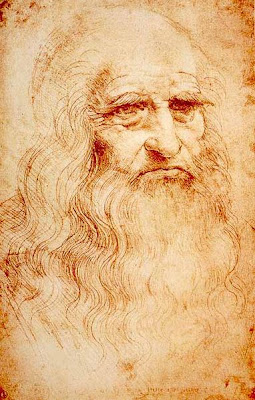
So the first topic is Leonardo da Vinci :)
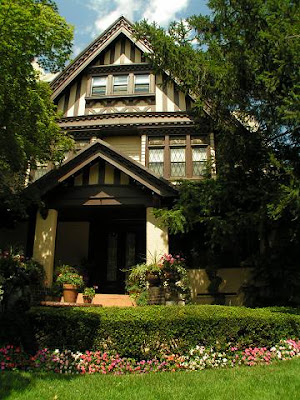
The second topic of your research is Houses Around the World :)
So good luck to you guys! You have time till Friday! Have fun ^_^
Hiki




-2.jpg)





 Posts
All Comments
Posts
All Comments



69 comments:
Cool!
But idk how to do them :(
~Chanyboy
1st comment :-D
woot woot second comment
thise is so unfair im not 13 years old
can people under 13 years of age do it in comment
April 15, 1452 – May 2, 1519) was an Italian polymath, scientist, mathematician, engineer, inventor, anatomist, painter, sculptor, architect, botanist, musician and writer. Leonardo has often been described as the archetype of the Renaissance man, a man whose unquenchable curiosity was equaled only by his powers of invention.[1] He is widely considered to be one of the greatest painters of all time and perhaps the most diversely talented person ever to have lived.[2] According to art historian Helen Gardner, the scope and depth of his interests were without precedent and "his mind and personality seem to us superhuman, the man himself mysterious and remote".[1]
Born the illegitimate son of a notary, Piero da Vinci, and a peasant woman, Caterina, at Vinci in the region of Florence, Leonardo was educated in the studio of the renowned Florentine painter, Verrocchio. Much of his earlier working life was spent in the service of Ludovico il Moro in Milan. He later worked in Rome, Bologna and Venice and spent his last years in France, at the home awarded him by Francis I.
Leonardo was and is renowned[2] primarily as a painter. Two of his works, the Mona Lisa and The Last Supper, are the most famous, most reproduced and most parodied portrait and religious painting of all time, respectively, their fame approached only by Michelangelo's Creation of Adam.[1] Leonardo's drawing of the Vitruvian Man is also regarded as a cultural icon,[3] being reproduced on everything from the Euro to text books to t-shirts. Perhaps fifteen of his paintings survive, the small number due to his constant, and frequently disastrous, experimentation with new techniques, and his chronic procrastination.[nb 2] Nevertheless, these few works, together with his notebooks, which contain drawings, scientific diagrams, and his thoughts on the nature of painting, comprise a contribution to later generations of artists only rivalled by that of his contemporary, Michelangelo.
Leonardo is revered for his technological ingenuity.[2] He conceptualised a helicopter, a tank, concentrated solar power, a calculator, the double hull and outlined a rudimentary theory of plate tectonics.[4] Relatively few of his designs were constructed or were even feasible during his lifetime,[nb 3] but some of his smaller inventions, such as an automated bobbin winder and a machine for testing the tensile strength of wire, entered the world of manufacturing unheralded.[nb 4] As a scientist, he greatly advanced the state of knowledge in the fields of anatomy, civil engineering, optics, and hydrodynamics.[5]
p.s this is fight
Yay, I'm looking forward to doing the research and seeing everyone else's entries
~Swifty~
"Da Vinci" redirects here. For other uses, see Da Vinci (disambiguation).
For the 17th century Italian composer, see Leonardo Vinci
Leonardo
Self-portrait in red chalk, circa 1512 to 1515.[nb 1]
Royal Library of Turin
Birth name Leonardo di Ser Piero
Born April 15, 1452(1452-04-15)
Vinci, Florence, in present-day Italy
Died May 2, 1519 (aged 67)
Amboise, Touraine (in present-day Indre-et-Loire, France)
Nationality Italian
Field Many and diverse fields of arts and sciences
Movement High Renaissance
Works Mona Lisa, The Last Supper, The Vitruvian Man
Leonardo di ser Piero da Vinci ( pronunciation (help·info), April 15, 1452 – May 2, 1519) was an Italian polymath, scientist, mathematician, engineer, inventor, anatomist, painter, sculptor, architect, botanist, musician and writer. Leonardo has often been described as the archetype of the Renaissance man, a man whose unquenchable curiosity was equaled only by his powers of invention.[1] He is widely considered to be one of the greatest painters of all time and perhaps the most diversely talented person ever to have lived.[2] According to art historian Helen Gardner, the scope and depth of his interests were without precedent and "his mind and personality seem to us superhuman, the man himself mysterious and remote".[1]
Born the illegitimate son of a notary, Piero da Vinci, and a peasant woman, Caterina, at Vinci in the region of Florence, Leonardo was educated in the studio of the renowned Florentine painter, Verrocchio. Much of his earlier working life was spent in the service of Ludovico il Moro in Milan. He later worked in Rome, Bologna and Venice and spent his last years in France, at the home awarded him by Francis I.
Leonardo was and is renowned[2] primarily as a painter. Two of his works, the Mona Lisa and The Last Supper, are the most famous, most reproduced and most parodied portrait and religious painting of all time, respectively, their fame approached only by Michelangelo's Creation of Adam.[1] Leonardo's drawing of the Vitruvian Man is also regarded as a cultural icon,[3] being reproduced on everything from the Euro to text books to t-shirts. Perhaps fifteen of his paintings survive, the small number due to his constant, and frequently disastrous, experimentation with new techniques, and his chronic procrastination.[nb 2] Nevertheless, these few works, together with his notebooks, which contain drawings, scientific diagrams, and his thoughts on the nature of painting, comprise a contribution to later generations of artists only rivalled by that of his contemporary, Michelangelo.
Leonardo is revered for his technological ingenuity.[2] He conceptualised a helicopter, a tank, concentrated solar power, a calculator, the double hull and outlined a rudimentary theory of plate tectonics.[4] Relatively few of his designs were constructed or were even feasible during his lifetime,[nb 3] but some of his smaller inventions, such as an automated bobbin winder and a machine for testing the tensile strength of wire, entered the world of manufacturing unheralded.[nb 4] As a scientist, he greatly advanced the state of knowledge in the fields of anatomy, civil engineering, optics, and hydrodynamics.[5]
by naser99
Do you prefer the quiet calm of a house on the water or the daring adventure of a house hanging off of a cliff, a great greenhouse design or a uncanny underground home design? A giant space in which to sprawl or a tiny nook in which to seek solitude? Whether you aspire to something exotic and unique or comfortable and cozy there is sure to be a contemporary, ultramodern, portable or prefab house here for you. Sorted into eight types, here are seventy of the most amazing, unusual, offbeat and unique houses in the world.
houses around the world
Gel
South Gobi Desert, Mongolia
Gel is the Mongolian transferable nomad house. They move the house when their domestic animals have eaten the grass in that area. The main 2 poles in the center support the house with the framework. They cover the framework with the white cloth filled with wool and hair of the domestic animals. In the center, they place the stove and the ceiling can be opened for the smoke. During the severe winter, they make double cover on the ceiling.
Ondol (Heated Floor during Winer)
Suwon, Korea
Ondol is the traditional under floor heating system which has been used in Korean peninsula where the winter is very severe. The heat from the stove in the kitchen goes through the pathway under the floor. They used to use the firewood or straw for the stove. The entrance of the house is made smaller to prevent cold air coming into tht house. They sleep on the warm floor with the mat and they do not need to wear room shoes. In the modern Korean house, Ondol is still used by hot water instead.
Complex Houses of Hakka Fanmily
Fujian, China
In dry Fujian area, the houses are built with the hard solid soil walls. The houses were built about 300 years ago. Hakka family was moving from the Yellow River area in 12 th to 13 th century. They build the many town houses surrounded by the hard walls to protect from the outsiders. The houses are 4-storied and hundreds of people are living together. One townhouse is for the whole family who has the same last name. The other family or not Hakka family are not allowed to live.
Tree House of Bagobo Tribe
Mindanao Island, Philippines
The people in the south of Philippines used to live in the tree houses. From the tree houses, they could find the enemies, the poisonous snakes and wild animals. They also could get the cooler and drier air. The houses are needed to rebuild as the trees grow. The tree houses are now used for the meeting and resting.
Tepee (Native American's Tent)
Alberta, Canada
Tepees are the transferable cone shaped house of Native American who move to live for hunting. When they move, they carry the poles on the horses. The house is 3.5 to 5.5 meters high and there is the exhaust pipe in the center of the house. The house is covered by buffalo hide. In these days, they use campus cloth in stead. They only use them when the festival is held.
Wooden Frame Houses
Rheinland-Pfalz, Germany
The wooden frame houses are very popular in Germany. They use the bricks for the wall and paint over the bricks which become very strong and last for hundreds of years. The wooden frames make them possible to have many windows.
White Houses
Santorin Island, Greece
The entrance of the Island is fully filled with the white houses on the cliff. The Island used to be an active volcano and the eruption around 1500 B.C. created this unique shape of the Island.
Cueba (Underground Houses)
Andalucia, Spain
In Andulucia of south Spain, the underground house, ‘Cueba' could keep cool inside even it is over 40 degrees outside and keep inside warm during the winter.
Sami (Lap Tribe) House
Rovaniemi, Finland
Sami people of North Norway are nomad and they move their houses in summer and in winter. In their winter houses which are made of wood and clay, they use fire to keep them warm. In summer, they live in transferable houses looks like the ones of Native American.
by:naser99
oh cool I'm gonna try ;)
good luck everyone
but how do you do it?
I drew a pic for a paint brush!
i didnt know exactly what to do so i put it on my blog.
Heres the link: cpharry2. wordpress.com
hope i win a paint brush :D
LOOK AT MY DRAWING IN LIVESTAR
IM TRYING TO WIN APAINT BRUH IVE PROBLY DRAW A AWSOME HOUSE LIKE DELI 5 TIMES
Hey Hiki! I made one Chobots art.
Here is the URL adress:
http://mondo912.files.wordpress.com/2009/08/chobots.png
Can I have a paint brush? :)
Please see my art, my chobots name's ookrisoo
Good luck guyz
Go! Go! Go!
Best Wishes
-Yellow
I will give a hint to the people entering he painted one of the most famous paintings in the world ;)
danshannon12
IT RAINED V-FLAGS!!!!!
ARE YOU KIDDING ME????????
hehe im happy. I missed it though.
hiki thats unfair vayerman just rained tons of v flags in cafe street for soo many people and i thought the v flag was rare and its not rare anymore
ahh i am really sad for what happened cause the v flags are rare and he rained for many people and its unfair
Italian polymath, scientist, mathematician, engineer, inventor, anatomist, painter, sculptor, architect, botanist, musician and writer. Leonardo has often been described as the archetype of the Renaissance man, a man whose unquenchable curiosity was equaled only by his powers of invention.[1] He is widely considered to be one of the greatest painters of all time and perhaps the most diversely talented person ever to have lived.[2] According to art historian Helen Gardner, the scope and depth of his interests were without precedent and "his mind and personality seem to us superhuman, the man himself mysterious and remote".[1]
Born the illegitimate son of a notary, Piero da Vinci, and a peasant woman, Caterina, at Vinci in the region of Florence, Leonardo was educated in the studio of the renowned Florentine painter, Verrocchio. Much of his earlier working life was spent in the service of Ludovico il Moro in Milan. He later worked in Rome, Bologna and Venice and spent his last years in France, at the home awarded him by Francis I.
Leonardo was and is renowned[2] primarily as a painter. Two of his works, the Mona Lisa and The Last Supper, are the most famous, most reproduced and most parodied portrait and religious painting of all time, respectively, their fame approached only by Michelangelo's Creation of Adam.[1] Leonardo's drawing of the Vitruvian Man is also regarded as a cultural icon,[3] being reproduced on everything from the Euro to text books to t-shirts. Perhaps fifteen of his paintings survive, the small number due to his constant, and frequently disastrous, experimentation with new techniques, and his chronic procrastination.[nb 2] Nevertheless, these few works, together with his notebooks, which contain drawings, scientific diagrams, and his thoughts on the nature of painting, comprise a contribution to later generations of artists only rivalled by that of his contemporary, Michelangelo.
Leonardo is revered for his technological ingenuity.[2] He conceptualised a helicopter, a tank, concentrated solar power, a calculator, the double hull and outlined a rudimentary theory of plate tectonics.[4] Relatively few of his designs were constructed or were even feasible during his lifetime,[nb 3] but some of his smaller inventions, such as an automated bobbin winder and a machine for testing the tensile strength of wire, entered the world of manufacturing unheralded.[nb 4] As a scientist, he greatly advanced the state of knowledge in the fields of anatomy, civil engineering, optics, and hydrodynamics.[5]
I can tell alot of people just copy and pasted from Wikipedia. I have seen two posts that were exactly the same, and you can tell they stole it because it has numbers like this: [1] [2]
please dont steal it guys :/
~yolande
i think it unfair on me because vayer man made it rain v-flags and i missed it because my mom called then it rained again and i missed it because my mom called again please i just want a red v-flag please
Leonardo di ser Piero da Vinci ( pronunciation (help·info), April 15, 1452 – May 2, 1519) was an Italian polymath, scientist, mathematician, engineer, inventor, anatomist, painter, sculptor, architect, botanist, musician and writer. Leonardo has often been described as the archetype of the Renaissance man, a man whose unquenchable curiosity was equaled only by his powers of invention.[1] He is widely considered to be one of the greatest painters of all time and perhaps the most diversely talented person ever to have lived.[2] According to art historian Helen Gardner, the scope and depth of his interests were without precedent and "his mind and personality seem to us superhuman, the man himself mysterious and remote".[1]
Born the illegitimate son of a notary, Piero da Vinci, and a peasant woman, Caterina, at Vinci in the region of Florence, Leonardo was educated in the studio of the renowned Florentine painter, Verrocchio. Much of his earlier working life was spent in the service of Ludovico il Moro in Milan. He later worked in Rome, Bologna and Venice and spent his last years in France, at the home awarded him by Francis I.
Leonardo was and is renowned[2] primarily as a painter. Two of his works, the Mona Lisa and The Last Supper, are the most famous, most reproduced and most parodied portrait and religious painting of all time, respectively, their fame approached only by Michelangelo's Creation of Adam.[1] Leonardo's drawing of the Vitruvian Man is also regarded as a cultural icon,[3] being reproduced on everything from the Euro to text books to t-shirts. Perhaps fifteen of his paintings survive, the small number due to his constant, and frequently disastrous, experimentation with new techniques, and his chronic procrastination.[nb 2] Nevertheless, these few works, together with his notebooks, which contain drawings, scientific diagrams, and his thoughts on the nature of painting, comprise a contribution to later generations of artists only rivalled by that of his contemporary, Michelangelo.
Leonardo is revered for his technological ingenuity.[2] He conceptualised a helicopter, a tank, concentrated solar power, a calculator, the double hull and outlined a rudimentary theory of plate tectonics.[4] Relatively few of his designs were constructed or were even feasible during his lifetime,[nb 3] but some of his smaller inventions, such as an automated bobbin winder and a machine for testing the tensile strength of wire, entered the world of manufacturing unheralded.[nb 4] As a scientist, he greatly advanced the state of knowledge in the fields of anatomy, civil engineering, optics, and hydrodynamics.[5]
I am doing Leonardo da Vinci:
Everyone knows that leonardo is a famous artist. He made lots of creations like the vanishing supper and the mona lisa. The Mona Kisa is actually a self portrait of Leonardo. Many scientists took x-rays of the painting and close comparition of the drawing of leonardo. Leonardo started paining at 1469. did you know that his father aprenticed him? Leonardo was also a scientist too!! Leonardo started accelerating his scinetific knowledge around 1505. Leonardo had an ability to observe and record nature. Leonardo lived from April 15, 1452 - May 2, 1519.
Like any rational human, Leonardo abhorred war -- he called it "beastly madness" -- but since Renaissance Italy was constantly at war he couldn't avoid it. He designed numerous weapons, including missiles, multi-barreled machine guns, grenades, mortars, and even a modern-style tank. He drew the line, however, with his plans for an underwater breathing device, which he refused to reveal, saying that men would likely use it for "evil in war."
He had a keen eye and quick mind that led him to make important scientific discoveries, yet he never published his ideas.
Here are some facts about him
He was a gentle vegetarian who loved animals and despised war, yet he worked as a military engineer to invent advanced and deadly weapons.
He was one of the greatest painters of the Italian Renaissance, yet he left only a handful of completed paintings.
Leonardo da Vinci trained as a painter during the Renaissance and became a true master of the craft. His amazing powers of observation and skill as an illustrator enabled him to notice and recreate the effects he saw in nature, and added a special liveliness to his portraits. Curious as well as observant, he constantly tried to explain what he saw, and described many experiments to test his ideas. Because he wrote down and sketched so many of his observations in his notebooks, we know that he was among the very first to take a scientific approach towards understanding how our world works and how we see it.
Artists and craftsmen in Leonardo's time knew how to build and repair the familiar kinds of machines. The idea of inventing new kinds of machines, however, would not have occurred to them.
Leonardo developed a unique new attitude about machines. He reasoned that by understanding how each separate machine part worked, he could modify them and combine
them in different ways to improve existing machines or create inventions no one had ever seen before.
Leonardo set out to write the first systematic explanations of how machines work and how the elements of machines can be combined.
His tremendous talents as a illustrator allowed him to draw his mechanical ideas with exceptional clarity. Five hundred years after they were put on paper, many of his sketches can easily be used as blueprints to create perfect working models
People who were contemporaries of Leonardo left records that they saw him write and paint left handed. He also made sketches showing his own left hand at work. Being a lefty was highly unusual in Leonardo's time. Because people were superstitious, children who naturally started using their left hands to write and draw were forced to use their right hands.
No one knows the true reason Leonardo used mirror writing, though several possibilities have been suggested:
He was trying to make it harder for people to read his notes and steal his ideas.
He was hiding his scientific ideas from the powerful Roman Catholic Church, whose teachings sometimes disagreed with what Leonardo observed.
Writing left handed from left to right was messy because the ink just put down would smear as his hand moved across it. Leonardo chose to write in reverse because it prevented smudging.
Thank you and thats all I got
Wow my comment is long!!!!! lol some of that stuff i wrote was the knowledge that I have in my head. oh and of i win I want my V-flag to be like light green you know just look at my playercard and you will see what color. I just dont want to get over estimated on if i win. Oh and i forgot something. leonardo became an idependent master at the year of 1478.
aarondeathking44 houses
1st house.Tepee (Native American's Tent)
Alberta, Canada
Tepees are the transferable cone shaped house of Native American who move to live for hunting. When they move, they carry the poles on the horses. The house is 3.5 to 5.5 meters high and there is the exhaust pipe in the center of the house. The house is covered by buffalo hide. In these days, they use campus cloth in stead. They only use them when the festival is held.
2nd house.Complex Houses of Hakka Fanmily
Fujian, China
In dry Fujian area, the houses are built with the hard solid soil walls. The houses were built about 300 years ago. Hakka family was moving from the Yellow River area in 12 th to 13 th century. They build the many town houses surrounded by the hard walls to protect from the outsiders. The houses are 4-storied and hundreds of people are living together. One townhouse is for the whole family who has the same last name. The other family or not Hakka family are not allowed to live.
3rd house.Stone Houses of Miao Tribe
Guizhou, China
In Miao village, the houses are built with stones. There are many lime stone caves in this area. The topographical feature here is called ‘Karst' where the stones contain a lot of calcium carbonate.
4th house.Houses on the Water
Sabah, Malaysia
The fishermen in Saba of Borneo Island live on the water. In the water village, there are so many houses still now. They use the timber of mangrove tree which has the durability against the sea water to build the water house. The water houses are officially issued the addresses and the family registrations.
5th house.Cueba (Underground Houses)
Andalucia, Spain
In Andulucia of south Spain, the underground house, ‘Cueba' could keep cool inside even it is over 40 degrees outside and keep inside warm during the winter.
chow aarondeathking44
Leonardo da Vinci was educated in his father's house receiving the usual elementary education of reading, writing and arithmetic. In 1467 he became an apprentice learning painting, sculpture and acquiring technical and mechanical skills. He was accepted into the painters' guild in Florence in 1472 but he continued to work as an apprentice until 1477. From that time he worked for himself in Florence as a painter. Already during this time he sketched pumps, military weapons and other machines.
Between 1482 and 1499 Leonardo was in the service of the Duke of Milan. He was described in a list of the Duke's staff as a painter and engineer of the duke. As well as completing six paintings during his time in the Duke's service he also advised on architecture, fortifications and military matters. He was also consider as a hydraulic and mechanical engineer.
During his time in Milan, Leonardo became interested in geometry. He read Leon Battista Alberti's books on architecture and Piero della Francesca's On Perspective in Painting. He illustrated Pacioli's Divina proportione and he continued to work with Pacioli and is reported to have neglected his painting because he became so engrossed in geometry.
Leonardo studied Euclid and Pacioli's Suma and began his own geometry research, sometimes giving mechanical solutions. He gave several methods of squaring the circle, again using mechanical methods. He wrote a book, around this time, on the elementary theory of mechanics which appeared in Milan around 1498.
Leonardo certainly realised the possibility of constructing a telescope and in Codex Atlanticus written in 1490 he talks of
... making glasses to see the Moon enlarged.
In a later work, Codex Arundul written about 1513, he says that
... in order to observe the nature of the planets, open the roof and bring the image of a single planet onto the base of a concave mirror. The image of the planet reflected by the base will show the surface of the planet much magnified.
See [28] for more details of this quotation and more of Leonardo's ideas about the Universe. He understood the fact that the Moon shone with reflected light from the Sun and he correctly explained the 'old Moon in the new Moon's arms' as the Moon's surface illuminated by light reflected from the Earth. He thought of the Moon as being similar to the Earth with seas and areas of solid ground.
In 1499 the French armies entered Milan and the Duke was defeated. Some months later Leonardo left Milan together with Pacioli. He travelled to Mantua, Venice and finally reached Florence. Although he was under constant pressure to paint, mathematical studies kept him away from his painting activity much of the time. He was for a time employed by Cesare Borgia as a
senior military architect and general engineer.
By 1503 he was back in Florence advising on the project to divert the River Arno behind Pisa to help with the siege of the city which the Florentines were engaged in. He then produced plans for a canal to allow Florence access to the sea. The canal was never built nor was the River Arno diverted.
In 1506 Leonardo returned for a second period in Milan. again his scientific work took precedence over his painting and he was involved in hydrodynamics, anatomy, mechanics, mathematics and optics.
In 1513 the French were removed from Milan and Leonardo moved again, this time to Rome. However he seems to have led a lonely life in Rome again more devoted to mathematical studies and technical experiments in his studio than to painting. After three years of unhappiness Leonardo accepted an invitation from King Francis I to enter his service in France.
houses:
When you wake up in the morning and smell the coffee, you know that it’s coming from the kitchen of your condominium, apartment or two-storey home. You have a living room, garage and perhaps a backyard. But have you ever imagined what life would be like with paintings of gods all over the exterior, a house made of sun dried mud and a court yard in between bedrooms?
India has some of the most colorful homes in the world. In the region of Shekhawati, gods are painted on the exterior of homes structured after the popular Mughal dynasty architecture. The dynasty’s most popular structures are the Fatehpur Sikri and the Taj Mahal. Due to lack of water supply, however, Fatehpur Sikri was abandoned soon after it was established under the reign of Babur. That is why it is surpassed in popularity by the enormous tomb of Mumtaz Mahal.
The country of Mali in West Africa on the other hand, houses the Great Mosque of Djenne made of sun dried mud and adobe. It dates back to the 13th Century and is a UNESCO World Heritage Site. Most homes in Africa were built in the same manner because wood is scarce. It is said that social status was evident in the number of brick rows one had to make his home; the poorest used only one row to build theirs.
The Indonesian Balinese house is a lot more like a family compound than your typical home. It consists of a courtyard and several small structures that may serve as bedrooms, kitchens or a reception area for guests. Just like a home, a Balinese house has its own gate. The number of gates, however, may vary in size; especially in large temples. Popular temples in Bali are the Kehen, Batur and Taman Ayun among others. Today, many resorts, such as the Bali Beach House, have made use of this Balinese style, giving new meaning to rest and relaxation.
Over in Santorini Greece, the view is absolutely breathtaking. The cluster of white painted villages by the gulf is truly unique to this country. Recently featured in the movie “Sisterhood of the Traveling Pants”, Santorini is both beautiful to look at, and to look out from. The caves built in the hill are kept at a constant temperature by volcanic activity. The design of the homes as well as the narrow pathways that surround them keeps Santorini’s inhabitants safe from harsh weather.
THE WHITE HOUSE
In the month of October 13, 1792. John Adams and his wife Abigail moved into the unfinished house in 1800. Construction was ongoing until 1809, when Thomas Jefferson was the occupant. The white house has been Housing presidents since the late 1790s. The houses first acuppant was John and Abigail adames.
Taj Mahal
For centuries, the Taj Mahal has inspired poets, painters and musicians to try and capture its elusive magic in word, colour and song. It is one of the most flawless architectural creations of the world. Since the 17th century, travellers have crossed continents to come and see this ultimate memorial to love, and few have been unmoved by its incomparable beauty.
Work on the mausoleum began in 1633 and 20,000 workers laboured for 17 years to build it. The most skilled architects, inlay craftsmen, calligraphers, stone-carvers and masons came from all across Indian and lands as distant as Persia and Turkey. The master mason was from Baghdab, an expert in building the double dome from Persia, and an inlay specialist from Delhi.
Yemen sent agates, the corals came from Arabia, the garnets from Bundelkhand, onyx and amethyst from Persia. Mumtaz Mahal’s final resting-place was ornamented like a queen’s jewel-box.
Anciet Chinese Castle
Known as "the double-city ancient castle", it was built in a typical castle style comprising an inner and outer city, constructed in the Ming and Qing dynasties respectively. Fortified by nine gates and nine passes, the castle is an impregnable fortress. Made of black bricks, Heshan Tower is about 100 meters high and can accommodate several hundred people. Inside the tower are wells, stone grinders, millstones and zigzagging secret pathways leading directly to the outside of the castle. With its abundant storage and complete facilities, the castle would not suffer from food shortages, even during times of war.
There are also 125 connected soldiers' hideout cells for concealing weapons - an ingenious structural element for ultimate protection against the enemy.
Sidney Opera House
The Sidney Opera House is one of the biggest opera houses in the world holding over 80,000 people and has had over 1,000 opera stars sing there. It is definatley a wonder of the world.
Houses Around the world:
Lol there are alot of stories that say how where houses made i picked one and a four year old girl said this.A House is made of princess and castles and lots and lots of FLOWERS.
About My Contry:
I Live in Canada Whoaa it is awsome here They are New Houses and old Houses on my area.I love in a old one but it is kind of scary wen i sleep.:| :D
I have a Best Frind that lives in another area not close to me. Sadly there was a tornado around his area. Where Canada Wonderland is, and there was lots of damage house there which was not cool at all. I was scared that my friends house was damaged but thank you GOD.It was not where there were. So we went to there house after like yesturday and we had lots of fun when we left we saw lots of damaged house. Now it is fixed and now everyone there is a safe, Some of them have wood windows because of the tornado.
Different Kinds Of Houses:
There are: Hauted house, New houses, Old houses, Tree Houses, Shelters, Shoe houses, Farm houses,boarding house.......there are looks of weird houses people make.Right. If we have something onto are heads and a Family that loves us like God. WE will be safe Thank you for listening what i mean.
P.S I really put alot of work on this it is hard and yaa thank you
Plus i am drawing for a Brush i know help and del got it i want one too soooo bad:D
m-inthebank13.blogspot.com
if u want my to drawyou tell me on my blog and i will try to do it as fast as i can like not rushing i will make u look good:D
P.S. i will try to make more information about houses if i have timwe cyaa
for houses around the world
The Upside Down House is a project created by a Polish businessman and philanthropist named Daniel Czapiewski, and is located in Poland in the tiny village of Szymbark, and here are a few pics with this house. Rather than simply being a bizarre tourist attraction this house, managed to attract thousands of tourists. The house is also meant to be a profound statement about the Communist era and the state of the world. Czapiewski’s company would normally take three weeks to construct a house, but this one took 114 days because the workers were disorientated by the strange angles of the walls. Many tourists who visit complain of mild seasickness and dizziness after just a few minutes of being in the structure.
~amber780` ps srry but i couldnt figure out to post this on the forum
Leonardo has often been described as the archetype of the Renaissance man, a man whose unquenchable curiosity was equaled only by his powers of invention.[1] He is widely considered to be one of the greatest painters of all time and perhaps the most diversely talented person ever to have lived.[2] According to art historian Helen Gardner, the scope and depth of his interests were without precedent and "his mind and personality seem to us superhuman, the man himself mysterious and remote".[1]
Born the illegitimate son of a notary, Piero da Vinci, and a peasant woman, Caterina, at Vinci in the region of Florence, Leonardo was educated in the studio of the renowned Florentine painter, Verrocchio. Much of his earlier working life was spent in the service of Ludovico il Moro in Milan. He later worked in Rome, Bologna and Venice and spent his last years in France, at the home awarded him by Francis I.
Leonardo was and is renowned[2] primarily as a painter. Two of his works, the Mona Lisa and The Last Supper, are the most famous, most reproduced and most parodied portrait and religious painting of all time, respectively, their fame approached only by Michelangelo's Creation of Adam.[1] Leonardo's drawing of the Vitruvian Man is also regarded as a cultural icon,[3] being reproduced on everything from the Euro to text books to t-shirts. Perhaps fifteen of his paintings survive, the small number due to his constant, and frequently disastrous, experimentation with new techniques, and his chronic procrastination.[nb 2] Nevertheless, these few works, together with his notebooks, which contain drawings, scientific diagrams, and his thoughts on the nature of painting, comprise a contribution to later generations of artists only rivalled by that of his contemporary, Michelangelo.
Leonardo is revered for his technological ingenuity.[2] He conceptualised a helicopter, a tank, concentrated solar power, a calculator, the double hull and outlined a rudimentary theory of plate tectonics.[4] Relatively few of his designs were constructed or were even feasible during his lifetime,[nb 3] but some of his smaller inventions, such as an automated bobbin winder and a machine for testing the tensile strength of wire, entered the world of manufacturing unheralded.
[nb 4] As a scientist, he greatly advanced the state of knowledge in the fields of anatomy, civil engineering, optics, and hydrodynamics.[5]
willkdh (if i win i want red v flag)
Leonardo da Vinci was educated in his father's house receiving the usual elementary education of reading, writing and arithmetic. In 1467 he became an apprentice learning painting, sculpture and acquiring technical and mechanical skills. He was accepted into the painters' guild in Florence in 1472 but he continued to work as an apprentice until 1477. From that time he worked for himself in Florence as a painter. Already during this time he sketched pumps, military weapons and other machines.
Between 1482 and 1499 Leonardo was in the service of the Duke of Milan. He was described in a list of the Duke's staff as a painter and engineer of the duke. As well as completing six paintings during his time in the Duke's service he also advised on architecture, fortifications and military matters. He was also consider as a hydraulic and mechanical engineer.
During his time in Milan, Leonardo became interested in geometry. He read Leon Battista Alberti's books on architecture and Piero della Francesca's On Perspective in Painting. He illustrated Pacioli's Divina proportione and he continued to work with Pacioli and is reported to have neglected his painting because he became so engrossed in geometry.
Leonardo studied Euclid and Pacioli's Suma and began his own geometry research, sometimes giving mechanical solutions. He gave several methods of squaring the circle, again using mechanical methods. He wrote a book, around this time, on the elementary theory of mechanics which appeared in Milan around 1498.
Leonardo certainly realised the possibility of constructing a telescope and in Codex Atlanticus written in 1490 he talks of
... making glasses to see the Moon enlarged.
In a later work, Codex Arundul written about 1513, he says that
... in order to observe the nature of the planets, open the roof and bring the image of a single planet onto the base of a concave mirror. The image of the planet reflected by the base will show the surface of the planet much magnified.
See [28] for more details of this quotation and more of Leonardo's ideas about the Universe. He understood the fact that the Moon shone with reflected light from the Sun and he correctly explained the 'old Moon in the new Moon's arms' as the Moon's surface illuminated by light reflected from the Earth. He thought of the Moon as being similar to the Earth with seas and areas of solid ground.
In 1499 the French armies entered Milan and the Duke was defeated. Some months later Leonardo left Milan together with Pacioli. He travelled to Mantua, Venice and finally reached Florence. Although he was under constant pressure to paint, mathematical studies kept him away from his painting activity much of the time. He was for a time employed by Cesare Borgia as a
senior military architect and general engineer.
By 1503 he was back in Florence advising on the project to divert the River Arno behind Pisa to help with the siege of the city which the Florentines were engaged in. He then produced plans for a canal to allow Florence access to the sea. The canal was never built nor was the River Arno diverted.
In 1506 Leonardo returned for a second period in Milan. again his scientific work took precedence over his painting and he was involved in hydrodynamics, anatomy, mechanics, mathematics and optics.
In 1513 the French were removed from Milan and Leonardo moved again, this time to Rome. However he seems to have led a lonely life in Rome again more devoted to mathematical studies and technical experiments in his studio than to painting. After three years of unhappiness Leonardo accepted an invitation from King Francis I to enter his service in France.
The French King gave Leonardo the title of
computergeek(if i win i whant a blue v-flag)
Houses Around the World
There are so many types of houses in the world. Some are made of wood and some are even made of dirt. Even though there are so many houses in the world, they all have on thing in common, that is to keep us dry, keep us safe, and keep us out of the weather and to protect us from preorders. The first house made dates all the way back to before 4000 B.C. Over in Europe the Greek made there houses out of heavy logs and any other spear wood that they could find. Back in the Middle Ages, the houses were known as huts or cabins usually made of stone. Back then, chimneys ere know as a luxury. Back to more recent time, the Indians lived in houses made of a mixture of dirt, clay, and mud. It might sound to here that a house was made of dirt, but it still was a house and it was good enough for them. Now days, most people in the US live in wood, stone, or brick houses. Some people that live in the country live in cabins. The richer people live in bigger houses than most people. There are so many type of houses back in time and all around the world, but on thing stays the same, they all server the same purpose.
posted by dannyotoy
vayer if you are hearing this can i have a v-flag? plz? i miss the rain i had to go to school :(((
Leonardo di Vinci, April 15, 1452 – May 2, 1519) was an Italian polymath, scientist, mathematician, engineer, inventor, anatomist, painter, sculptor, architect, botanist, musician and writer. Leonardo has often been described as the archetype of the Renaissance man, a man whose unquenchable curiosity was equaled only by his powers of invention.He is widely considered to be one of the greatest painters of all time and perhaps the most diversely talented person ever to have lived. According to art historian Helen Gardner, the scope and depth of his interests were without precedent and "his mind and personality seem to us superhuman, the man himself mysterious and remote".
In dry Fujian area, the houses are built with the hard solid soil walls. The houses were built about 300 years ago. Hakka family was moving from the Yellow River area in 12th to 13th century. They build the many town houses surrounded by the hard walls to protect from the outsiders. The houses are 4-storied and hundreds of people are living together. One townhouse is for the whole family who has the same last name. The other family or not Hakka family are not allowed to live
I'd like a red, orange, light blue, white, or bright green v-flag if i win one of them. :D If i do get one supprise me for the color i get.
I made my stuff short an interesting as you said. :D :D :D I really hope i win im dieing for a V-flag
My pictures will be on my blog Agent-gonzo20.blogspot.com
Leonardo di ser Piero da Vinci pronunciation April 15, 1452 – May 2, 1519
Leonardo da Vinci's full birth name was "Leonardo di ser Piero da Vinci", meaning "Leonardo, (son) of (Mes)ser Piero from Vinci".[7]
Leonardo da Vinci's works have been preserved over the hundreds of years since Leonardo's time, and while his works are scattered
in different areas of the globe, everyone can enjoy Da Vinci through the numerous books detailing his life, or through any of the many Da Vinci posters that have been printed.
A work three years in the making, Leonardo Da Vinci's The Last Supper remains one of the greatest masterpieces of all time. Even over 500 years after the painting was completed, this piece remains one of the most studied paintings in history, and The Last Supper is among the most sold of all Da Vinci posters.
that was Leonardo di ser Piero da Vinci :)
-JenniD5-
this is information about Victorian houses where I am
Victorian houses are architecturally commonly referred to as the Victorian Style but this "style" is really a period in history. The Victorian era roughly corresponds to the time when Queen Victoria ruled Britain (1837 to 1901). During this time, industrialization brought many innovations in architecture. There is a wide variety of Victorian styles, each with its own distinctive features.
Types of Victorian Styles Include: Second Empire, Queen Anne, Stick, Shingle, and Richardsonian Romanesque
-JenniD5-
Lol i know the guy i dont know how to spell his name but he is a famous painter and one of his paintings were HUGE we mesured it at school! Hes a really good painter!
ebtamasblog.tk
Oh and also Hikikomori most people are just copiying and pasting stuff so if it looks like they have just... yeah..... Ok!
ebtamasblog.tk
my picture of leonardo da vinci is on http://chobots-jennid.blogspot.com/
-JenniD5-
Leonardo da Vinci was born on April 15, 1452 in central Italy. Not much is known about his boyhood, except that he was raised by his grandparents, and he was the son of a peasant woman and a law clerk. Leonardo seemed to be very talented in many areas with being noted as a fine musician, an inventor, and, of course, a truly revered artist.
At the early age of 14, Leonardo's father, Ser Piero, recognized what great talent he had with painting. In fact, Leonardo had painted the picture of a dragon that looked so real that it actually scared his father when looking at it. Father and son made a journey to visit Andrea del Verrocchio, a well-known artist, where Leonardo became an apprentice under Verrocchio. This job kept Leonardo very busy.
By the age of 30, Leonardo began sketching and writing daily into notebooks. One of the forms of writing that Leonardo took a fancy to was mirror writing (whereby you write backwards, so that you can only read a message by holding it up to a mirror). Some scholars believe Leonardo did this to keep his thoughts private, while others attributed it to the fact that he was left-handed and it was easier for him to write this way.
As far as being an artist, Leonardo has been called "a genius," "unmatched," and "divinely inspired." You would think, based on these comments that Leonardo was very disciplined in his work, but this is not the case. In fact, most of his major works of art have not been completed. Scholars believe this is because he was never satisfied with what he did, while others think that his mind was constantly racing with new thoughts and ideas, and he wanted to get them going before he lost his train of thought. Both make sense, but no one really knows why.
Read more: http://homeschool-curricula.suite101.com/article.cfm/leonardo_da_vinci_for_kids#ixzz0PBuKFcHk
plz if i win hikikomori i would like to give my black v flag to voltage causes hes really nice to me
April 15, 1452 – May 2, 1519) was an Italian polymath, scientist, mathematician, engineer, inventor, anatomist, painter, sculptor, architectone of the greatest painters of all time and perhaps the most diversely talented person ever to have lived.[2] According to art historian Helen Gardner, the scope and depth of his interests were without precedent and "his mind and personality seem to us superhuman, the man himself mysterious and remote".[1]
Born the illegitimate son of a notary, Piero da Vinci, and a peasant woman, Caterina, at Vinci in the region of Florence, Leonardo was educated in the studio of the renowned Florentine painter, Verrocchio. Much of his earlier working life was spent in the service of Ludovico il Moro in Milan. He later worked in Rome, Bologna and Venice and spent his last years in France, at the home awarded him by Francis I.
Leonardo was and is renowned[2] primarily as a painter. Two of his works, the Mona Lisa and The Last Supper, are the most famous, most reproduced and most parodied portrait and religious painting of all time, respectively, their fame approached only by Michelangelo's Creation of Adam.[1] Leonardo's drawing of the Vitruvian Man is also regarded as a cultural icon,[3] being reproduced on everything from the Euro to text books to t-shirts. Perhaps fifteen of his paintings survive, the small number engineering, optics, and hydrodynamics.[5]
Leonardo was born on April 15, 1452, "at the third hour of the night"[nb 5] in the Tuscan hill town of Vinci, in the lower valley of the Arno River in the territory of Florence.[7] He was the illegitimate son of Messer Piero Fruosino di Antonio da Vinci, a Florentine notary, and Caterina, a peasant[6][8] who may have been a slave from the Middle East.[nb 6][9] Leonardo had no surname in the modern sense, "da Vinci" simply meaning "of Vinci": his full birth name was "Leonardo di ser Piero da Vinci", meaning "Leonardo, (son) of (Mes)ser Piero from Vinci".[7]
Little is known about Leonardo's early life. He spent his first five years in the hamlet of Anchiano, then lived in the household of his father, grandparents and uncle, Francesco, in the small town of Vinci. His father had married a sixteen-year-old girl named Albiera, who loved Leonardo but died young.[10] In later life, Leonardo only recorded two childhood incidents. One, which he regarded as an omen, was when a kite dropped from the sky and hovered over his cradle, its tail feathers brushing his face.[10] The second occurred while exploring in the mountains. He discovered a cave and was both terrified that some great monster might lurk there, and driven by curiosity to find out what was inside.[10]
Leonardo's early life has been the subject of historical conjecture.[11] Vasari, the 16th-century biographer of Renaissance painters tells of how a local peasant requested that Ser Piero ask his talented son to paint a picture on a round plaque. Leonardo responded with a painting of snakes spitting fire which was so terrifying that Ser Piero sold it to a Florentine art dealer, who sold it to the Duke of Milan. Meanwhile, having made a profit, Ser Piero bought a plaque decorated with a heart pierced by an arrow, which he gave to the peasant.[12]
In 1466, at the age of fourteen, Leonardo was apprenticed to one of the most successful artists of his day, Andrea di Cione, known as Verrocchio. Verrocchio's workshop was at the centre of the intellectual currents of Florence, assuring the young Leonardo of an education in the humanities. Other famous painters apprenticed or associated with the workshop include Ghirlandaio, Perugino, Botticelli, and Lorenzo di Credi.[10][13] Leonardo would have been exposed to a vast range of technical skills and had the opportunity to learn drafting, chemistry, metallurgy, metal working, plaster casting, leather working, mechanics and carpentry as well as the artistic skills of drawing, painting, sculpting and modelling.[14][15][16]
Much of the painted production of Verrocchio's workshop was done by his employees. According to Vasari, Leonardo collaborated with Verrocchio on his Baptism of Christ, painting the young angel holding Jesus's robe in a manner that was so far superior to his master's that Verrocchio put down his brush and never painted again.[12] This is probably an exaggeration. On close examination, the painting reveals much that has been painted or touched up over the tempera using the new technique of oil paint, the landscape, the rocks that can be seen through the brown mountain stream and much of the figure of Jesus bearing witness to the hand of Leonardo.[8]
Leonardo himself may have been the model for two works by Verrocchio, including the bronze statue of David in the Bargello, and the Archangel Michael in Tobias and the Angel.[8]
By 1472, at the age of twenty, Leonardo qualified as a master in the Guild of St Luke, the guild of artists and doctors of medicine,[nb 7] but even after his father set him up in his own workshop, his attachment to Verrocchio was such that he continued to collaborate with him.[10] Leonardo's earliest known dated work is a drawing in pen and ink of the Arno valley, drawn on August 5, 1473.[nb 8][13]
Professional life, 1476–1513
The Adoration of the Magi, (1481)—Uffizi.Court records of 1476 show that Leonardo and three other young men were charged with sodomy,[nb 9] and acquitted.[17] From that date until 1478 there is no record of his work or even of his whereabouts,[18] although it is assumed that Leonardo had his own workshop in Florence between 1476 and 1481.[8] He was commissioned to paint an altarpiece in 1478 for the Chapel of St Bernard and The Adoration of the Magi in 1481 for the Monks of San Donato a Scopeto. This important commission was interrupted when Leonardo went to Milan.
In 1482 Leonardo, who according to Vasari was a most talented musician,[19] created a silver lyre in the shape of a horse's head. Lorenzo de’ Medici sent Leonardo, bearing the lyre as a gift, to Milan, to secure peace with Ludovico il Moro, Duke of Milan.[20] At this time Leonardo wrote an often-quoted letter to Ludovico, describing the many marvellous and diverse things that he could achieve in the field of engineering and informing the Lord that he could also paint.[13][21]
Leonardo continued work in Milan between 1482 and 1499. He was commissioned to paint the Virgin of the Rocks for the Confraternity of the Immaculate Conception, and The Last Supper for the monastery of Santa Maria delle Grazie.[10] While living in Milan between 1493 and 1495 Leonardo listed a woman called Caterina among his dependents in his taxation documents. When she died in 1495, the list of funeral expenditure suggests that she was his mother.[10][22]
He worked on many different projects for Ludovico, including the preparation of floats and pageants for special occasions, designs for a dome for Milan Cathedral and a model for a huge equestrian monument to Francesco Sforza, Ludovico's predecessor. Seventy tons of bronze were set aside for casting it. The monument remained unfinished for several years, which was not unusual for Leonardo. In 1492 the clay model of the horse was completed. It surpassed in size the only two large equestrian statues of the Renaissance, Donatello's statue of Gattemelata in Padua and Verrocchio's Bartolomeo Colleoni in Venice, and became known as the "Gran Cavallo".[13][23]
Study of horse from Leonardo's journals – Royal Library, Windsor CastleLeonardo began making detailed plans for its casting,[13] however, Michelangelo rudely implied that Leonardo was unable to cast it.[10] In November 1494 Ludovico gave the bronze to be used for cannons to defend the city from invasion by Charles VIII.[13]
At the start of the Second Italian War in 1499, the invading French troops used the life-size clay model for the "Gran Cavallo" for target practice. With Ludovico Sforza overthrown, Leonardo, with his assistant Salai and friend, the mathematician Luca Pacioli, fled Milan for Venice, where he was employed as a military architect and engineer, devising methods to defend the city from naval attack.[8][10]
On his return to Florence in 1500, he and his household were guests of the Servite monks at the monastery of Santissima Annunziata and were provided with a workshop where, according to Vasari, Leonardo created the cartoon of The Virgin and Child with St. Anne and St. John the Baptist, a work that won such admiration that "men and women, young and old" flocked to see it "as if they were attending a great festival".[12][nb 10] In 1502 Leonardo entered the service of Cesare Borgia, the son of Pope Alexander VI, acting as a military architect and engineer and travelling throughout Italy with his patron.[8] He returned to Florence where he rejoined the Guild of St Luke on October 18, 1503, and spent two years designing and painting a great mural of The Battle of Anghiari for the Signoria,[8] with Michelangelo designing its companion piece, The Battle of Cascina.[nb 11] In Florence in 1504, he was part of a committee formed to relocate, against the artist's will, Michelangelo's statue of David.[26]
In 1506 he returned to Milan. Many of Leonardo's most prominent pupils or followers in painting either knew or worked with him in Milan,[10] including Bernardino Luini, Giovanni Antonio Boltraffio and Marco D'Oggione.[nb 12] However, he did not stay in Milan for long because his father had died in 1504, and in 1507 he was back in Florence trying to sort out problems with his brothers over his father's estate. By 1508 he was back in Milan, living in his own house in Porta Orientale in the parish of Santa Babila.[8]
Old age, 1513-1519
Clos Lucé in France, where Leonardo died in 1519From September 1513 to 1516, Leonardo spent much of his time living in the Belvedere in the Vatican in Rome, where Raphael and Michelangelo were both active at the time.[8] In October 1515, Francis I of France recaptured Milan.[27] On December 19, Leonardo was present at the meeting of Francis I and Pope Leo X, which took place in Bologna.[10][28][29] It was for Francis that Leonardo was commissioned to make a mechanical lion which could walk forward, then open its chest to reveal a cluster of lilies.[12][nb 13] In 1516, he entered François' service, being given the use of the manor house Clos Lucé[nb 14] near the king's residence at the royal Chateau Amboise. It was here that he spent the last three years of his life, accompanied by his friend and apprentice, Count Francesco Melzi, supported by a pension totalling 10,000 scudi.[8]
Leonardo died at Clos Lucé, on May 2, 1519. Francis I had become a close friend. Vasari records that the King held Leonardo's head in his arms as he died, although this story, beloved by the French and portrayed in romantic paintings by Ingres, Ménageot and other French artists, as well as by Angelica Kauffmann, may be legend rather than fact.[nb 15][31] Vasari also tells us that in his last days, Leonardo sent for a priest to make his confession and to receive the Holy Sacrament.[12] In accordance to his will, sixty beggars followed his casket. He was buried in the Chapel of Saint-Hubert in the castle of Amboise. Melzi was the principal heir and executor, receiving as well as money, Leonardo's paintings, tools, library and personal effects. Leonardo also remembered his other long-time pupil and companion, Salai and his servant Battista di Vilussis, who each received half of Leonardo's vineyards, his brothers who received land, and his serving woman who received a black cloak of good stuff with a fur edge.[32]
Some twenty years after Leonardo's death, Francis was reported by the goldsmith and sculptor Benevenuto Cellini as saying: "There had never been another man born in the world who knew as much as Leonardo, not so much about painting, sculpture and architecture, as that he was a very great philosopher."[33]
Relationships and influences
Ghiberti's Gates of Paradise, (1425-1452) were a source of communal pride. Many artists assisted in their creation.
Florence — Leonardo's artistic and social background
Leonardo commenced his apprenticeship with Verrocchio in 1466, the year that Verrocchio's master, the great sculptor Donatello, died. The painter Uccello whose early experiments with perspective were to influence the development of landscape painting, was a very old man. The painters Piero della Francesca and Fra Filippo Lippi, sculptor Luca della Robbia, and architect and writer Alberti were in their sixties. The successful artists of the next generation were Leonardo's teacher Verrocchio, Antonio Pollaiuolo and the portrait sculptor, Mino da Fiesole whose lifelike busts give the most reliable likenesses of Lorenzo Medici's father Piero and uncle Giovanni.[34][35][36]
Leonardo's youth was spent in a Florence that was ornamented by the works of these artists and by Donatello's contemporaries, Masaccio whose figurative frescoes were imbued with realism and emotion and Ghiberti whose Gates of Paradise, gleaming with gold leaf, displayed the art of combining complex figure compositions with detailed architectural backgrounds. Piero della Francesca had made a detailed study of perspective, and was the first painter to make a scientific study of light. These studies and Alberti's Treatise were to have a profound effect on younger artists and in particular on Leonardo's own observations and artworks.[34][35][36]
Massaccio's depiction of the naked and distraught Adam and Eve leaving the Garden of Eden created a powerfully expressive image of the human form, cast into three dimensions by the use of light and shade which was to be developed in the works of Leonardo in a way that was to be influential in the course of painting. The Humanist influence of Donatello's David can be seen in Leonardo's late paintings, particularly John the Baptist.[34]
Small devotional picture by Verrocchio, c. 1470A prevalent tradition in Florence was the small altarpiece of the Virgin and Child. Many of these were created in tempera or glazed terracotta by the workshops of Filippo Lippi, Verrocchio and the prolific della Robbia family.[34] Leonardo's early Madonnas such as the The Madonna with a carnation and The Benois Madonna followed this tradition while showing indiosyncratic departures, particularly in the case of the Benois Madonna in which the Virgin is set at an oblique angle to the picture space with the Christ Child at the opposite angle. This compositional theme was to emerge in Leonardo's later paintings such as The Virgin and Child with St. Anne.[10]
Leonardo was a contemporary of Botticelli, Ghirlandaio and Perugino, who were all slightly older than he was. He would have met them at the workshop of Verrocchio, with whom they had associations, and at the Academy of the Medici.[10] Botticelli was a particular favourite of the Medici family and thus his success as a painter was assured. Ghirlandaio and Perugino were both prolific and ran large workshops. They competently delivered commissions to well-satisfied patrons who appreciated Ghirlandaio's ability to portray the wealthy citizens of Florence within large religious frescoes, and Perugino's ability to deliver a multitude of saints and angels of unfailing sweetness and innocence.[34]
The Portinari Altarpiece, by Hugo van der Goes for a Florentine familyThese three were among those commissioned to paint the walls of the Sistine Chapel, the work commencing with Perugino's employment in 1479. Leonardo was not part of this prestigious commission. His first significant commission, The Adoration of the Magi for the Monks of Scopeto, was never completed.[10]
In 1476, during the time of Leonardo's association with Verrocchio's workshop, Hugo van der Goes arrived in Florence, bringing the Portinari Altarpiece and the new painterly techniques from Northern Europe which were to profoundly effect Leonardo, Ghirlandaio, Perugino and others. In 1479, the Sicilian painter Antonello da Messina, who worked exclusively in oils, travelled north on his way to Venice, where the leading painter, Giovanni Bellini adopted the technique of oil painting, quickly making it the preferred method in Venice. Leonardo was also later to visit Venice.[36]
Like the two contemporary architects, Bramante and Antonio da Sangallo the Elder, Leonardo experimented with designs for centrally planned churches, a number of which appear in his journals, as both plans and views, although none was ever realised.[34][37]
Lorenzo de' Medici between Antonio Pucci and Francesco Sassetti, with Giulio de' Medici, fresco by GhirlandaioLeonardo's political contemporaries were Lorenzo Medici (il Magnifico), who was three years older, and his popular younger brother Giuliano who was slain in the Pazzi Conspiracy in 1478. Ludovico il Moro who ruled Milan between 1479–1499 and to whom Leonardo was sent as ambassador from the Medici court, was also of Leonardo's age.[34][35]
With Alberti, Leonardo visited the home of the Medici and through them came to know the older Humanist philosophers of whom Marsiglio Ficino, proponent of Neo Platonism, Cristoforo Landino, writer of commentaries on Classical writings, and John Argyropoulos, teacher of Greek and translator of Aristotle were foremost. Also associated with the Academy of the Medici was Leonardo's contemporary, the brilliant young poet and philosopher Pico della Mirandola.[36][38] Leonardo later wrote in the margin of a journal "The Medici made me and the Medici destroyed me." While it was through the action of Lorenzo that Leonardo was to receive his important Milanese commissions, it is not known exactly what Leonardo meant by this cryptic comment.[10]
Although usually named together as the three giants of the High Renaissance, Leonardo, Michelangelo and Raphael were not of the same generation. Leonardo was twenty-three when Michelangelo was born and thirty-one when Raphael was born. Raphael only lived until the age of 37 and died in 1520, the year after Leonardo, but Michelangelo went on creating for another 45 years.[35][36]
Personal life
Main article: Leonardo da Vinci's personal life
Within Leonardo's lifetime, his extraordinary powers of invention, his "outstanding physical beauty", "infinite grace", "great strength and generosity", "regal spirit and tremendous breadth of mind" as described by Vasari[12] attracted the curiosity of others. Many authors have speculated on various aspects of Leonardo's personality. One such aspect is his respect for life evidenced by his vegetarianism and his habit, described by Vasari, of purchasing caged birds and releasing them.[12] [39]
Leonardo had many friends who are now renowned either in their fields or for their historical significance. They included the mathematician Luca Pacioli, with whom he collaborated on a book in the 1490s, as well as Franchinus Gaffurius and Isabella d'Este.[citation needed]Leonardo appears to have had no close relationships with women except for his friendship with Isabella d'Este. He drew a portrait of her while on a journey which took him through Mantua, and which appears to have been used to create a painted portrait now lost.[10]
Beyond friendship, Leonardo kept his private life secret. His sexuality has often been the subject of study, analysis and speculation. This trend began in the mid-16th century and was revived in the 19th and 20th centuries, most notably by Sigmund Freud.[40]
Salai as John the Baptist (c. 1514)—Louvre
Assistants and pupils
Gian Giacomo Caprotti da Oreno, nicknamed Salai or Il Salaino ("The Little Unclean One" i.e., the devil), entered Leonardo's household in 1490. After only a year, Leonardo made a list of his misdemeanours, calling him "a thief, a liar, stubborn, and a glutton", after he had made off with money and valuables on at least five occasions, and spent a fortune on clothes.[41] Nevertheless, Leonardo's notebooks during their early years contain many drawings of the student, who remained in Leonardo's household for the next thirty years.[8] Salai executed a number of paintings under the name of Andrea Salai, but although Vasari claims that Leonardo "taught him a great deal about painting",[12] his work is generally considered to be of less artistic merit than others among Leonardo's pupils, such as Marco d'Oggione and Boltraffio. In 1515, he painted a nude version of the Mona Lisa, known as Monna Vanna.[42] Salai owned the Mona Lisa at the time of his death in 1525, and in his will it was assessed at 505 lire, an exceptionally high valuation for a small panel portrait.[43]
In 1506, Leonardo took on another pupil, Count Francesco Melzi, the son of a Lombard aristocrat, who is considered to have been his favourite student. He travelled to France with Leonardo, and remained with him until the latter's death.[10] Upon Leonardo's death, Melzi inherited the artistic and scientific works, manuscripts, and collections of Leonardo, and faithfully administered the estate.
Despite the recent awareness and admiration of Leonardo as a scientist and inventor, for the better part of four hundred years his enormous fame rested on his achievements as a painter and on a handful of works, either authenticated or attributed to him that have been regarded as among the supreme masterpieces ever created.[44]
These paintings are famous for a variety of qualities which have been much imitated by students and discussed at great length by connoisseurs and critics. Among the qualities that make Leonardo's work unique are the innovative techniques that he used in laying on the paint, his detailed knowledge of anatomy, light, botany and geology, his interest in physiognomy and the way in which humans register emotion in expression and gesture, his innovative use of the human form in figurative composition and his use of the subtle gradation of tone. All these qualities come together in his most famous painted works, the Mona Lisa, the Last Supper and the Virgin of the Rocks.[45]
Early works
Leonardo's early works begin with the Baptism of Christ painted in conjunction with Verrocchio. Two other paintings appear to date from his time at the workshop, both of which are Annunciations. One is small, 59 centimetres (23 in) long and 14 centimetres (5.5 in) high. It is a "predella" to go at the base of a larger composition, in this case a painting by Lorenzo di Credi from which it has become separated. The other is a much larger work, 217 centimetres (85 in) long.[8] In both these Annunciations, Leonardo has used a formal arrangement, such as in Fra Angelico's two well known pictures of the same subject, of the Virgin Mary sitting or kneeling to the right of the picture, approached from the left by an angel in profile, with rich flowing garment, raised wings and bearing a lily. Although previously attributed to Ghirlandaio, the larger work is now almost universally attributed to Leonardo.[46]
In the smaller picture Mary averts her eyes and folds her hands in a gesture that symbolised submission to God's will. In the larger picture, however, Mary is not in the least submissive. The beautiful girl, interrupted in her reading by this unexpected messenger, puts a finger in her bible to mark the place and raises her hand in a formal gesture of greeting or surprise.[34] This calm young woman appears to accept her role as the Mother of God not with resignation but with confidence. In this painting the young Leonardo presents the Humanist face of the Virgin Mary, recognising humanity's role in God's incarnation.[nb 16]
Paintings of the 1480s
Virgin of the Rocks, Louvre, possibly 1505–1508, demonstrates Leonardo's interest in nature.In the 1480s Leonardo received two very important commissions, and commenced another work which was also of ground-breaking importance in terms of composition. Unfortunately two of the three were never finished and the third took so long that it was subject to lengthy negotiations over completion and payment. One of these paintings is that of St. Jerome in the Wilderness. Bortolon associates this picture with a difficult period of Leonardo's life, and the signs of melancholy in his diary: "I thought I was learning to live; I was only learning to die."[10]
Although the painting is barely begun the composition can be seen and it is very unusual.[nb 17] Jerome, as a penitent, occupies the middle of the picture, set on a slight diagonal and viewed somewhat from above. His kneeling form takes on a trapezoid shape, with one arm stretched to the outer edge of the painting and his gaze looking in the opposite direction. J. Wasserman points out the link between this painting and Leonardo's anatomical studies.[27] Across the foreground sprawls his symbol, a great lion whose body and tail make a double spiral across the base of the picture space. The other remarkable feature is the sketchy landscape of craggy rocks against which the figure is silhouetted.
The daring display of figure composition, the landscape elements and personal drama also appear in the great unfinished masterpiece, the Adoration of the Magi, a commission from the Monks of San Donato a Scopeto. It is a very complex composition about 250 square centimetres. Leonardo did numerous drawings and preparatory studies, including a detailed one in linear perspective of the ruined classical architecture which makes part of the backdrop to the scene. But in 1482 Leonardo went off to Milan at the behest of Lorenzo de’ Medici in order to win favour with Ludovico il Moro and the painting was abandoned.[8][46]
The third important work of this period is the Virgin of the Rocks which was commissioned in Milan for the Confraternity of the Immaculate Conception. The painting, to be done with the assistance of the de Predis brothers, was to fill a large complex altarpiece, already constructed.[27] Leonardo chose to paint an apocryphal moment of the infancy of Christ when the Infant John the Baptist, in protection of an angel, met the Holy Family on the road to Egypt. In this scene, as painted by Leonardo, John recognizes and worships Jesus as the Christ. The painting demonstrates an eerie beauty as the graceful figures kneel in adoration around the infant Christ in a wild landscape of tumbling rock and whirling water.[48] While the painting is quite large, about 200 × 120 centimetres, it is not nearly as complex as the painting ordered by the monks of St Donato, having only four figures rather than about fifty and a rocky landscape rather than architectural details. The painting was eventually finished; in fact, two versions of the painting were finished, one which remained at the chapel of the Confraternity and the other which Leonardo carried away to France. But the Brothers did not get their painting, or the de Predis their payment, until the next century.[8][13]
The Last Supper (1498)—Convent of Sta. Maria delle Grazie, Milan, Italy
Paintings of the 1490s
Leonardo's most famous painting of the 1490s is The Last Supper, also painted in Milan. The painting represents the last meal shared by Jesus with his disciples before his capture and death. It shows specifically the moment when Jesus has said "one of you will betray me". Leonardo tells the story of the consternation that this statement caused to the twelve followers of Jesus.[13]
The novelist Matteo Bandello observed Leonardo at work and wrote that some days he would paint from dawn till dusk without stopping to eat, and then not paint for three or four days at a time.[27] This, according to Vasari, was beyond the comprehension of the prior, who hounded him until Leonardo asked Ludovico to intervene. Vasari describes how Leonardo, troubled over his ability to adequately depict the faces of Christ and the traitor Judas, told the Duke that he might be obliged to use the prior as his model.[12]
When finished, the painting was acclaimed as a masterpiece of design and characterisation,[12] but it deteriorated rapidly, so that within a hundred years it was described by one viewer as "completely ruined".[8] Leonardo, instead of using the reliable technique of fresco, had used tempera over a ground that was mainly gesso, resulting in a surface which was subject to mold and to flaking.[8] Despite this, the painting has remained one of the most reproduced works of art, countless copies being made in every medium from carpets to cameos.
Paintings of the 1500s
Mona Lisa or La Gioconda (1503–1505/1507)—Louvre, Paris, FranceAmong the works created by Leonardo in the 1500s is the small portrait known as the Mona Lisa or "la Gioconda", the laughing one. The painting is famous, in particular, for the elusive smile on the woman's face, its mysterious quality brought about perhaps by the fact that the artist has subtly shadowed the corners of the mouth and eyes so that the exact nature of the smile cannot be determined. The shadowy quality for which the work is renowned came to be called "sfumato" or Leonardo's smoke. Vasari, who is generally thought to have known the painting only by repute, said that "the smile was so pleasing that it seemed divine rather than human; and those who saw it were amazed to find that it was as alive as the original".[12][nb 18]
Other characteristics found in this work are the unadorned dress, in which the eyes and hands have no competition from other details, the dramatic landscape background in which the world seems to be in a state of flux, the subdued colouring and the extremely smooth nature of the painterly technique, employing oils, but laid on much like tempera and blended on the surface so that the brushstrokes are indistinguishable.[nb 19] Vasari expressed the opinion that the manner of painting would make even "the most confident master ... despair and lose heart."[12] The perfect state of preservation and the fact that there is no sign of repair or overpainting is extremely rare in a panel painting of this date.[8]
In the Virgin and Child with St. Anne (see below [StAnne]) the composition again picks up the theme of figures in a landscape which Wasserman describes as "breathtakingly beautiful"[27] and harks back to the St Jerome picture with the figure set at an oblique angle. What makes this painting unusual is that there are two obliquely set figures superimposed. Mary is seated on the knee of her mother, St Anne. She leans forward to restrain the Christ Child as he plays roughly with a lamb, the sign of his own impending sacrifice.[13] This painting, which was copied many times, was to influence Michelangelo, Raphael, and Andrea del Sarto,[8] and through them Pontormo and Correggio. The trends in composition were adopted in particular by the Venetian painters Tintoretto and Veronese.
Drawings
Leonardo was not a prolific painter, but he was a most prolific draftsman, keeping journals full of small sketches and detailed drawings recording all manner of things that took his attention. As well as the journals there exist many studies for paintings, some of which can be identified as preparatory to particular works such as The Adoration of the Magi, The Virgin of the Rocks and The Last Supper.[50] His earliest dated drawing is a Landscape of the Arno Valley, 1473, which shows the river, the mountains, Montelupo Castle and the farmlands beyond it in great detail.[10][50]
Among his famous drawings are the Vitruvian Man, a study of the proportions of the human body, the Head of an Angel, for The Virgin of the Rocks in the Louvre, a botanical study of Star of Bethlehem and a large drawing (160×100 cm) in black chalk on coloured paper of the The Virgin and Child with St. Anne and St. John the Baptist in the National Gallery, London.[50] This drawing employs the subtle sfumato technique of shading, in the manner of the Mona Lisa. It is thought that Leonardo never made a painting from it, the closest similarity being to The Virgin and Child with St. Anne in the Louvre.[8]
Other drawings of interest include numerous studies generally referred to as "caricatures" because, although exaggerated, they appear to be based upon observation of live models. Vasari relates that if Leonardo saw a person with an interesting face he would follow them around all day observing them.[12] There are numerous studies of beautiful young men, often associated with Salai, with the rare and much admired facial feature, the so-called "Grecian profile".[nb 20] These faces are often contrasted with that of a warrior.[50] Salai is often depicted in fancy-dress costume. Leonardo is known to have designed sets for pageants with which these may be associated. Other, often meticulous, drawings show studies of drapery. A marked development in Leonardo's ability to draw drapery occurred in his early works. Another often-reproduced drawing is a macabre sketch that was done by Leonardo in Florence in 1479 showing the body of Bernardo Baroncelli, hanged in connection with the murder of Giuliano, brother of Lorenzo de'Medici, in the Pazzi Conspiracy.[50] With dispassionate integrity Leonardo has registered in neat mirror writing the colours of the robes that Baroncelli was wearing when he died.
Journals
Renaissance humanism saw no mutually exclusive polarities between the sciences and the arts, and Leonardo's studies in science and engineering are as impressive and innovative as his artistic work, recorded in notebooks comprising some 13,000 pages of notes and drawings, which fuse art and natural philosophy (the forerunner of modern science). These notes were made and maintained daily throughout Leonardo's life and travels, as he made continual observations of the world around him.[13]
The journals are mostly written in mirror-image cursive. The reason may have been more a practical expediency than for reasons of secrecy as is often suggested. Since Leonardo wrote with his left hand, it is probable that it was easier for him to write from right to left.[nb 21]
A page from Leonardo's journal showing his study of a foetus in the womb (c. 1510) Royal Library, Windsor CastleHis notes and drawings display an enormous range of interests and preoccupations, some as mundane as lists of groceries and people who owed him money and some as intriguing as designs for wings and shoes for walking on water. There are compositions for paintings, studies of details and drapery, studies of faces and emotions, of animals, babies, dissections, plant studies, rock formations, whirl pools, war machines, helicopters and architecture.[13]
These notebooks—originally loose papers of different types and sizes, distributed by friends after his death—have found their way into major collections such as the Royal Library at Windsor Castle, the Louvre, the Biblioteca Nacional de España, the Victoria and Albert Museum, the Biblioteca Ambrosiana in Milan which holds the twelve-volume Codex Atlanticus, and British Library in London which has put a selection from its notebook BL Arundel MS 263 online.[51] The Codex Leicester is the only major scientific work of Leonardo's in private hands. It is owned by Bill Gates, and is displayed once a year in different cities around the world.
Leonardo's journals appear to have been intended for publication because many of the sheets have a form and order that would facilitate this. In many cases a single topic, for example, the heart or the human foetus, is covered in detail in both words and pictures, on a single sheet.[52][nb 22] Why they were not published within Leonardo's lifetime is unknown.[13]
Scientific studies
Rhombicuboctahedron as published in Pacioli's De Divina ProportioneLeonardo's approach to science was an observational one: he tried to understand a phenomenon by describing and depicting it in utmost detail, and did not emphasize experiments or theoretical explanation. Since he lacked formal education in Latin and mathematics, contemporary scholars mostly ignored Leonardo the scientist, although he did teach himself Latin. In the 1490s he studied mathematics under Luca Pacioli and prepared a series of drawings of regular solids in a skeletal form to be engraved as plates for Pacioli's book De Divina Proportione, published in 1509.[13]
Anatomy
Leonardo's formal training in the anatomy of the human body began with his apprenticeship to Andrea del Verrocchio, his teacher insisting that all his pupils learn anatomy. As an artist, he quickly became master of topographic anatomy, drawing many studies of muscles, tendons and other visible anatomical features.
As a successful artist, he was given permission to dissect human corpses at the Hospital of Santa Maria Nuova in Florence and later at hospitals in Milan and Rome. From 1510 to 1511 he collaborated in his studies with the doctor Marcantonio della Torre and together they prepared a theoretical work on anatomy for which Leonardo made more than 200 drawings. It was published only in 1680 (161 years after his death) under the heading Treatise on painting.[13][50]
Leonardo drew many studies of the human skeleton and its parts, as well as muscles and sinews, the heart and vascular system, the sex organs, and other internal organs. He made one of the first scientific drawings of a fetus in utero.[50] As an artist, Leonardo closely observed and recorded the effects of age and of human emotion on the physiology, studying in particular the effects of rage. He also drew many figures who had significant facial deformities or signs of illness.[13][50]
He also studied and drew the anatomy of many other animals as well, dissecting cows, birds, monkeys, bears, and frogs, and comparing in his drawings their anatomical structure with that of humans. He also made a number of studies of horses.
Engineering and inventions
A design for a flying machine, (c. 1488) Institut de France, ParisDuring his lifetime Leonardo was valued as an engineer. In a letter to Ludovico il Moro he claimed to be able to create all sorts of machines both for the protection of a city and for siege. When he fled to Venice in 1499 he found employment as an engineer and devised a system of moveable barricades to protect the city from attack. He also had a scheme for diverting the flow of the Arno River in order to flood Pisa. His journals include a vast number of inventions, both practical and impractical. They include musical instruments, hydraulic pumps, reversible crank mechanisms, finned mortar shells, and a steam cannon.[10][13]
In 1502, Leonardo produced a drawing of a single span 720-foot (240 m) bridge as part of a civil engineering project for Ottoman Sultan Beyazid II of Istanbul. The bridge was intended to span an inlet at the mouth of the Bosporus known as the Golden Horn. Beyazid did not pursue the project, because he believed that such a construction was impossible. Leonardo's vision was resurrected in 2001 when a smaller bridge based on his design was constructed in Norway.[55] On May 17, 2006, the Turkish government decided to construct Leonardo's bridge to span the Golden Horn.[56]
For much of his life, Leonardo was fascinated by the phenomenon of flight, producing many studies of the flight of birds, including his c. 1505 Codex on the Flight of Birds, as well as plans for several flying machines, including a helicopter and a light hang glider.[13] Most were impractical, like the aerial screw helicopter design cannot provide lift. However, the hang glider has been successfully constructed and demonstrated.[57]
Leonardo the legend
Main article: Cultural depictions of Leonardo da Vinci
Francis I of France receiving the last breath of Leonardo da Vinci, by Ingres, 1818.Within Leonardo's own lifetime his fame was such that the King of France carried him away like a trophy, and was claimed to have supported him in his old age and held him in his arms as he died.[58] Vasari, in his Lives of the Artists written about thirty years after Leonardo's death, described him as having talents that "transcended nature".
The interest in Leonardo has never slackened. The crowds still queue to see his most famous artworks, T-shirts bear his most famous drawing and writers, like Vasari, continue to marvel at his genius and speculate about his private life and, particularly, about what one so intelligent actually believed in.[13]
Giorgio Vasari, in the enlarged edition of Lives of the Artists, 1568,[12] introduced his chapter on Leonardo da Vinci with the following words:
In the normal course of events many men and women are born with remarkable talents; but occasionally, in a way that transcends nature, a single person is marvellously endowed by Heaven with beauty, grace and talent in such abundance that he leaves other men far behind, all his actions seem inspired and indeed everything he does clearly comes from God rather than from human skill. Everyone acknowledged that this was true of Leonardo da Vinci, an artist of outstanding physical beauty, who displayed infinite grace in everything that he did and who cultivated his genius so brilliantly that all problems he studied he solved with ease.
—Giorgio Vasari
Statue of Leonardo da Vinci at the Uffizi, FlorenceThe continued admiration that Leonardo commanded from painters, critics and historians is reflected in many other written tributes. Baldassare Castiglione, author of Il Cortegiano ("The Courtier"), wrote in 1528: "... Another of the greatest painters in this world looks down on this art in which he is unequalled ..."[59] while the biographer known as "Anonimo Gaddiano" wrote, c. 1540: "His genius was so rare and universal that it can be said that nature worked a miracle on his behalf ...".[60]
The 19th century brought a particular admiration for Leonardo's genius, causing Henry Fuseli to write in 1801: "Such was the dawn of modern art, when Leonardo da Vinci broke forth with a splendour that distanced former excellence: made up of all the elements that constitute the essence of genius ..."[61] This is echoed by A. E. Rio who wrote in 1861: "He towered above all other artists through the strength and the nobility of his talents."[62]
By the 19th century, the scope of Leonardo's notebooks was known, as well as his paintings. Hippolyte Taine wrote in 1866: "There may not be in the world an example of another genius so universal, so incapable of fulfilment, so full of yearning for the infinite, so naturally refined, so far ahead of his own century and the following centuries."[63]
The famous art historian Bernard Berenson wrote in 1896: "Leonardo is the one artist of whom it may be said with perfect literalness: Nothing that he touched but turned into a thing of eternal beauty. Whether it be the cross section of a skull, the structure of a weed, or a study of muscles, he, with his feeling for line and for light and shade, forever transmuted it into life-communicating values."[64]
The interest in Leonardo's genius has continued unabated; experts study and translate his writings, analyse his paintings using scientific techniques, argue over attributions and search for works which have been recorded but never found.[65] Liana Bortolon, writing in 1967, said: "Because of the multiplicity of interests that spurred him to pursue every field of knowledge ... Leonardo can be considered, quite rightly, to have been the universal genius par excellence, and with all the disquieting overtones inherent in that term. Man is as uncomfortable today, faced with a genius, as he was in the 16th century. Five centuries have passed, yet we still view Leonardo with awe."[10]
And i would like a light gray v flag plzz TY hiki i did all lot of researc. Bye hiki
HOPE I WIN!! i worked really really really really really really hard on mine!!! i doubt i will win after all the posts i saw. but its ok. im used to losing. :(
~shirnkychick
Leonardo di ser Piero da Vinci ( pronunciation (help·info), April 15, 1452 – May 2, 1519) was an Italian polymath, scientist, mathematician, engineer, inventor, anatomist, painter, sculptor, architect, botanist, musician and writer. Leonardo has often been described as the archetype of the Renaissance man, a man whose unquenchable curiosity was equaled only by his powers of invention.[1] He is widely considered to be one of the greatest painters of all time and perhaps the most diversely talented person ever to have lived.[2] According to art historian Helen Gardner, the scope and depth of his interests were without precedent and "his mind and personality seem to us superhuman, the man himself mysterious and remote".[1]
Born the illegitimate son of a notary, Piero da Vinci, and a peasant woman, Caterina, at Vinci in the region of Florence, Leonardo was educated in the studio of the renowned Florentine painter, Verrocchio. Much of his earlier working life was spent in the service of Ludovico il Moro in Milan. He later worked in Rome, Bologna and Venice and spent his last years in France, at the home awarded him by Francis I.
Leonardo was and is renowned[2] primarily as a painter. Two of his works, the Mona Lisa and The Last Supper, are the most famous, most reproduced and most parodied portrait and religious painting of all time, respectively, their fame approached only by Michelangelo's Creation of Adam.[1] Leonardo's drawing of the Vitruvian Man is also regarded as a cultural icon,[3] being reproduced on everything from the Euro to text books to t-shirts. Perhaps fifteen of his paintings survive, the small number due to his constant, and frequently disastrous, experimentation with new techniques, and his chronic procrastination.[nb 2] Nevertheless, these few works, together with his notebooks, which contain drawings, scientific diagrams, and his thoughts on the nature of painting, comprise a contribution to later generations of artists only rivalled by that of his contemporary, Michelangelo.
Leonardo is revered for his technological ingenuity.[2] He conceptualised a helicopter, a tank, concentrated solar power, a calculator, the double hull and outlined a rudimentary theory of plate tectonics.[4] Relatively few of his designs were constructed or were even feasible during his lifetime,[nb 3] but some of his smaller inventions, such as an automated bobbin winder and a machine for testing the tensile strength of wire, entered the world of manufacturing unheralded.[nb 4] As a scientist, he greatly advanced the state of knowledge in the fields of anatomy, civil engineering, optics, and hydrodynamics.[5]
Leonardo da Vinci is one of the most celebrated artists of all time. The Italian Renaissance artist was a master painter, engineer, architect, anatomist, inventor and sculptor. Leonardo is considered to be a genius, creating some of the most famous paintings ever painted (Including the Mona Lisa and the Last Supper) and his notebooks filled with drawings of many inventions that were to become the machines and technology that we now use (flying machines, submarines and war machines).
Leonardo da Vinci on the 15th of April in 1452, in Anchiano, Vinci, not far from Florence in Italy. Hi father was a notary "ser Piero Fruosino di Antonio da Vinci" and mother Caterina was a peasant woman. Leonardo was born an illegitimate child and raised in his father's home in Florence.
Leonardo impressed his father with his early drawings, prompting him to introduce the young Leonardo to the painter Andrea del Verrocchio. At just 14 Leonardo da Vinci became an apprentice of Verrochio and quickly became his most talented worker. In the painting "Baptism of Christ", Leonardo was assigned to paint one angel, while Verrocchio painted the other.
Chobots name : vikey
Comments are preserved read-only.